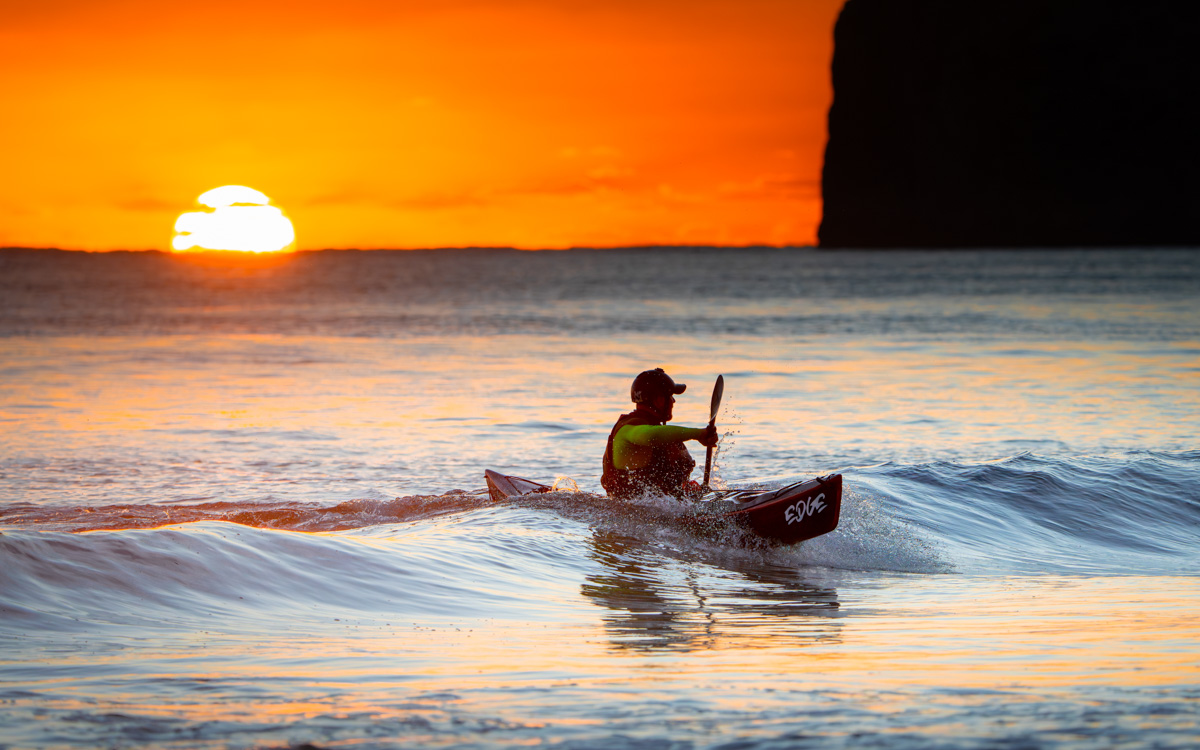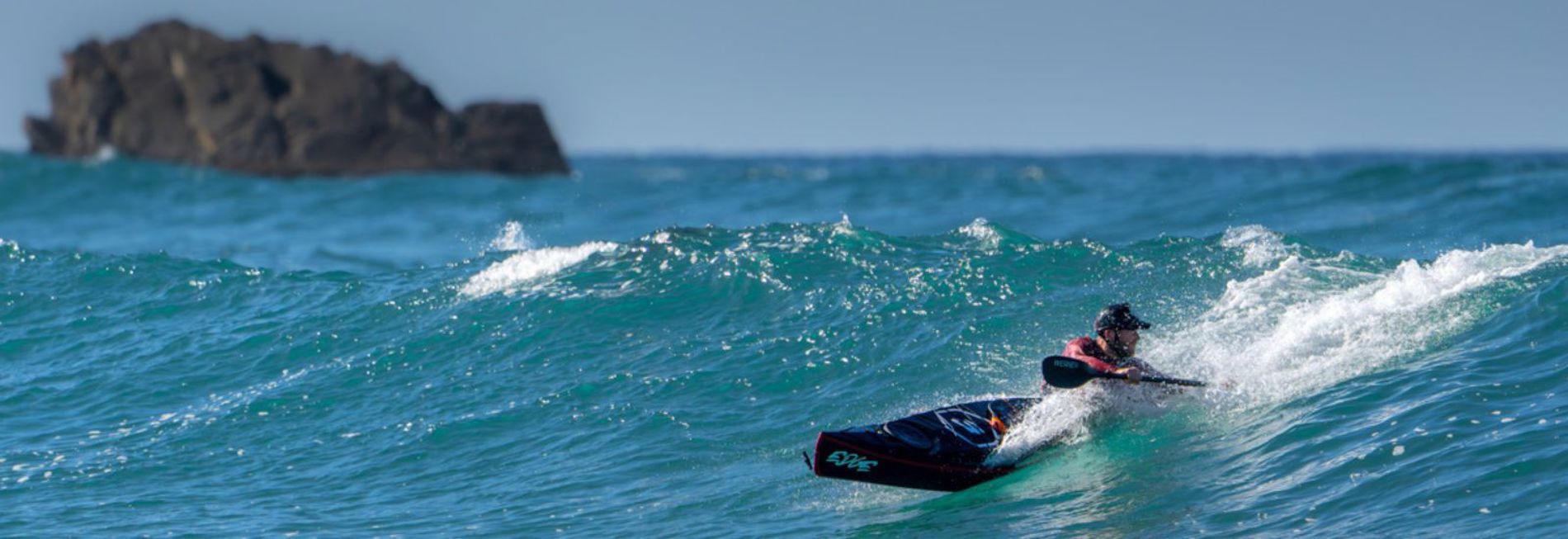
The kayak was originally built purely out of enthusiasm, in my own garage, without drawings and without any big plans to make it commercial.
I live on the northwest coast of Norway, close to Ålesund. This is an incredible area for kayaking, with dramatic scenery and excellent conditions for surfing and rock gardening, which is something I personally really enjoy. We have a special place here called Alnes, an old fishing village, which I named the kayak after. When the conditions are right, it has an amazing surf spot.
The problem was that the “traditional sea kayaks”,simply didn’t perform well enough to really have fun in these conditions. That made me think: perhaps I should build something myself that was better suited to what I wanted to do. I also couldn’t find anything else on the market that delivered exactly what I was looking for.
So I decided to build one myself. I’m a craftsman and work a lot with wood, so I’m fortunate enough to be able to build most things I want myself.
The kayak was designed from the beginning with surfing and playfulness as the main priorities. I paddled it for about a year, and eventually I thought: this is too good to keep to myself. I wanted to share it with the wider paddling community, and that is how Edge Kayaks came about.
The name “Edge” comes from the fact that the design is right on the edge of traditional rules and preconceived ideas about form and function. I haven’t worried too much about what other people think. I have simply built what I believe works, and I have built it with my heart.
After deciding to commercialise the kayak and building a plug, I made some adjustments to both the hull and deck to optimise the design. The result was a much more versatile kayak, while still retaining the playfulness that I originally designed it for.
It is a fantastic kayak for instructors because it is so easy to handle in waves and wind. Despite being only 392 cm long, there is no problem keeping up with a group or other paddlers. I use it for almost everything. It is a perfect day-trip kayak, with three hatches, and it also works well for weekend trips with a tent and camping gear. Of course, it doesn’t have as much storage space as a longer sea kayak.
I designed it to make Eskimo rolls easy, with a low rear deck, and to make self-rescue easier as well. The idea is that you should feel safe and confident in this kayak, while also being able to really push yourself. That also means that beginners can experience a sense of achievement much earlier.
It is a kayak that needs to be tried and learned. It feels quite different to paddle compared with a traditional sea kayak. I would describe it as something between a sea kayak and a river kayak. I have taken the best qualities from both worlds and tweaked the design to create a kayak that is genuinely exciting and fun to paddle.
I think the Edge Alnes would be a perfect kayak for the English coastline, with tidal races, surf, rock gardening and so on. It is incredibly fun to paddle in moving water and current.
Edd Bjørke
Designer & Founder, Edge Kayaks